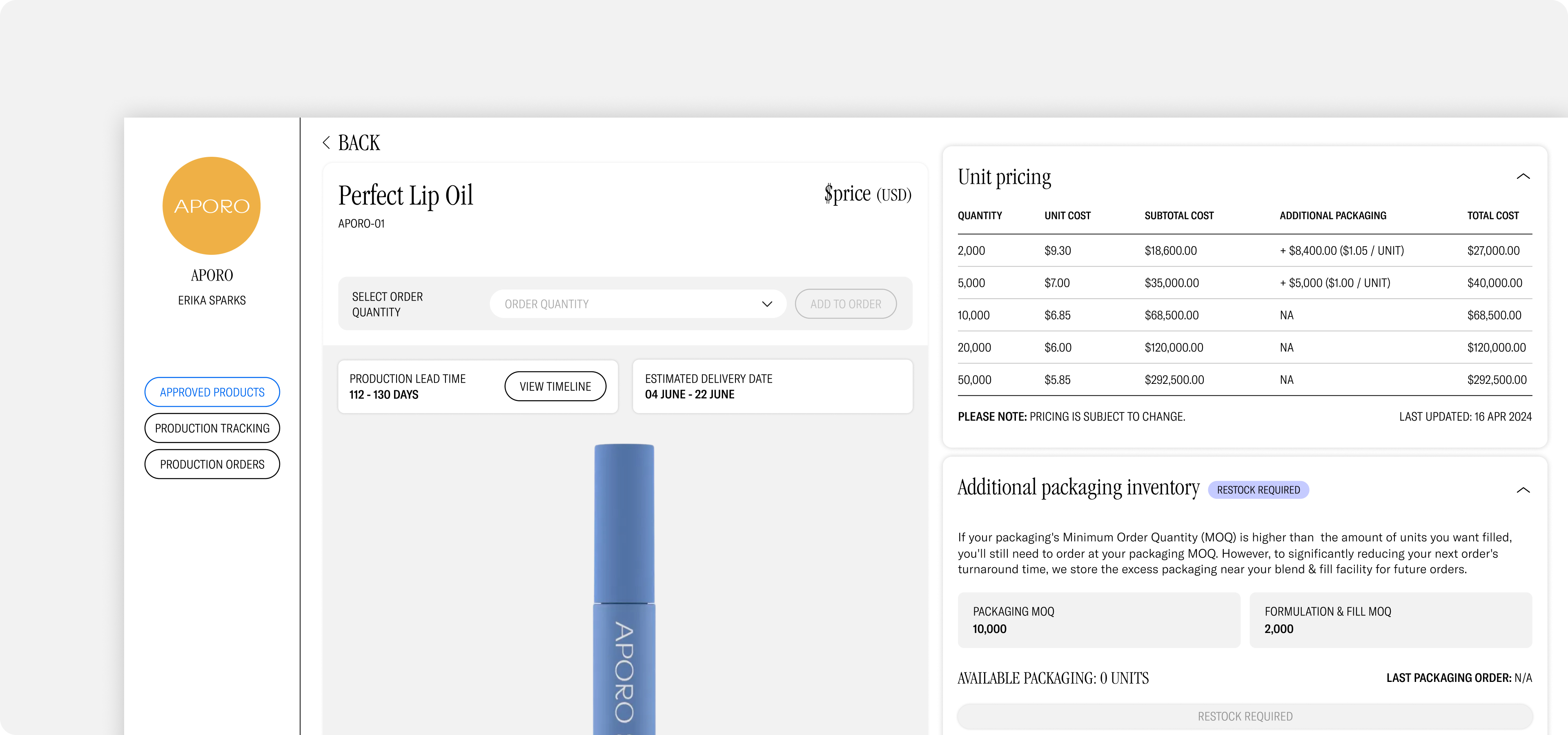
Complex manufacturing projects managed through account managers. Designed the platform that gave customers direct control.
Role
Product Designer (no PM)
Company
Series A B2B manufacturing SaaS
Key Outcome
First two enterprise customers onboarded. Customers reported feeling more in control and more confident in Atelier as a partner.
Reading Time
6 minutes
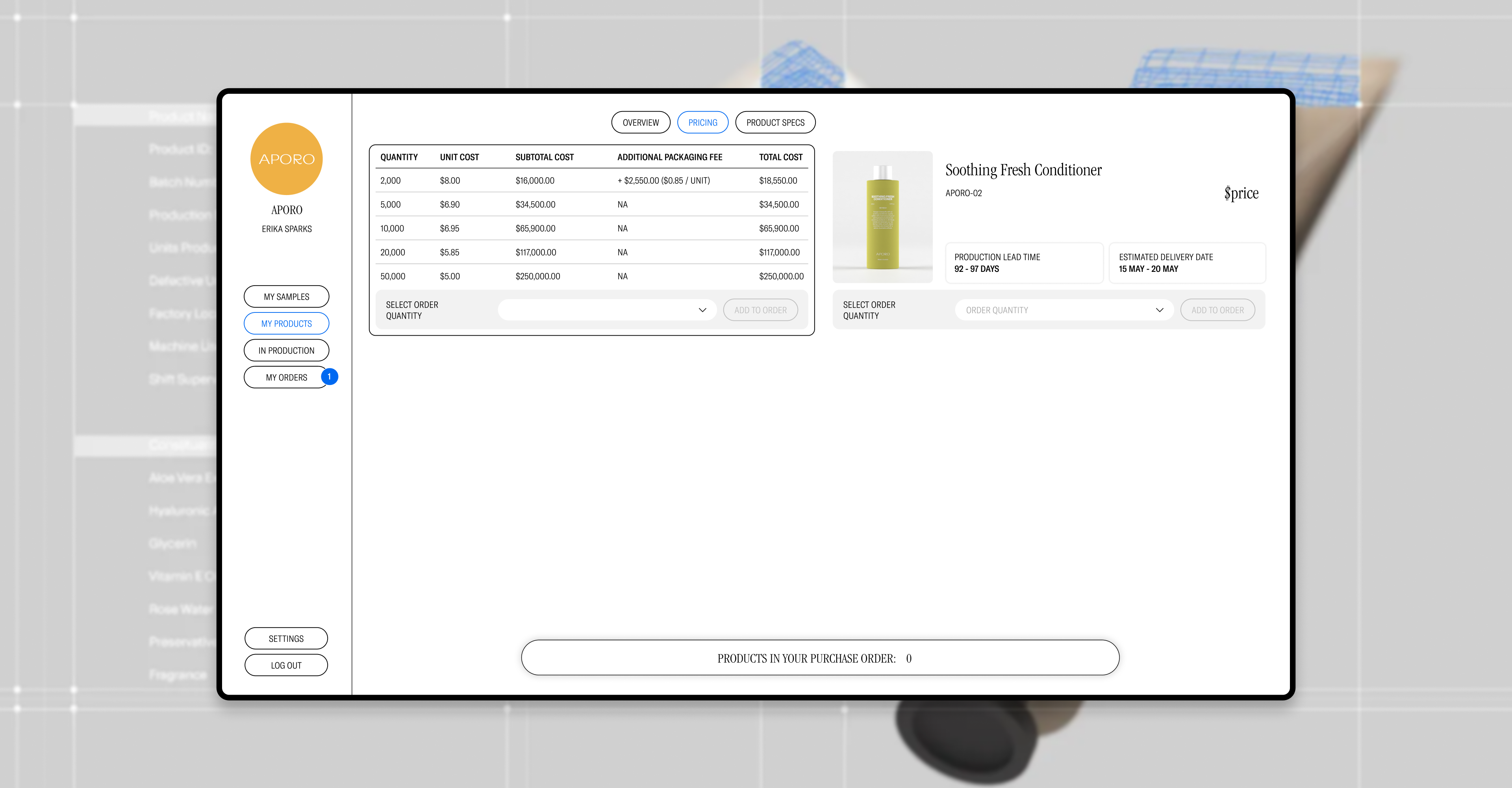
This case study covers the customer-facing platform. In parallel the operational infrastructure that made it possible was built.
Context
As the business scaled rapidly, the manual model required constant human touch points which couldn't sustain the pace. The business couldn't scale without adding headcount or changing how customers were serviced.
Team
3 designers, 8 engineers
Technical Constraints
ERP implementation integration, real-time data synchronisation requirements, database migration
.png)
Every status request triggered a multi-team chain reaction that strained resources.
Specs, pricing, and timelines lived across emails, spreadsheets, and in internal teams files. Customers couldn't make confident purchasing decisions without reliable access to their own project information.
.png)
No PM, no clear end state, and the infrastructure being built as we designed on top of it.
There wasn't a clear picture of where we were heading, a goal that didn't fully exist yet, with missing data infrastructure and no formal coordination. The hardest part was creating enough clarity and alignment to move forward.
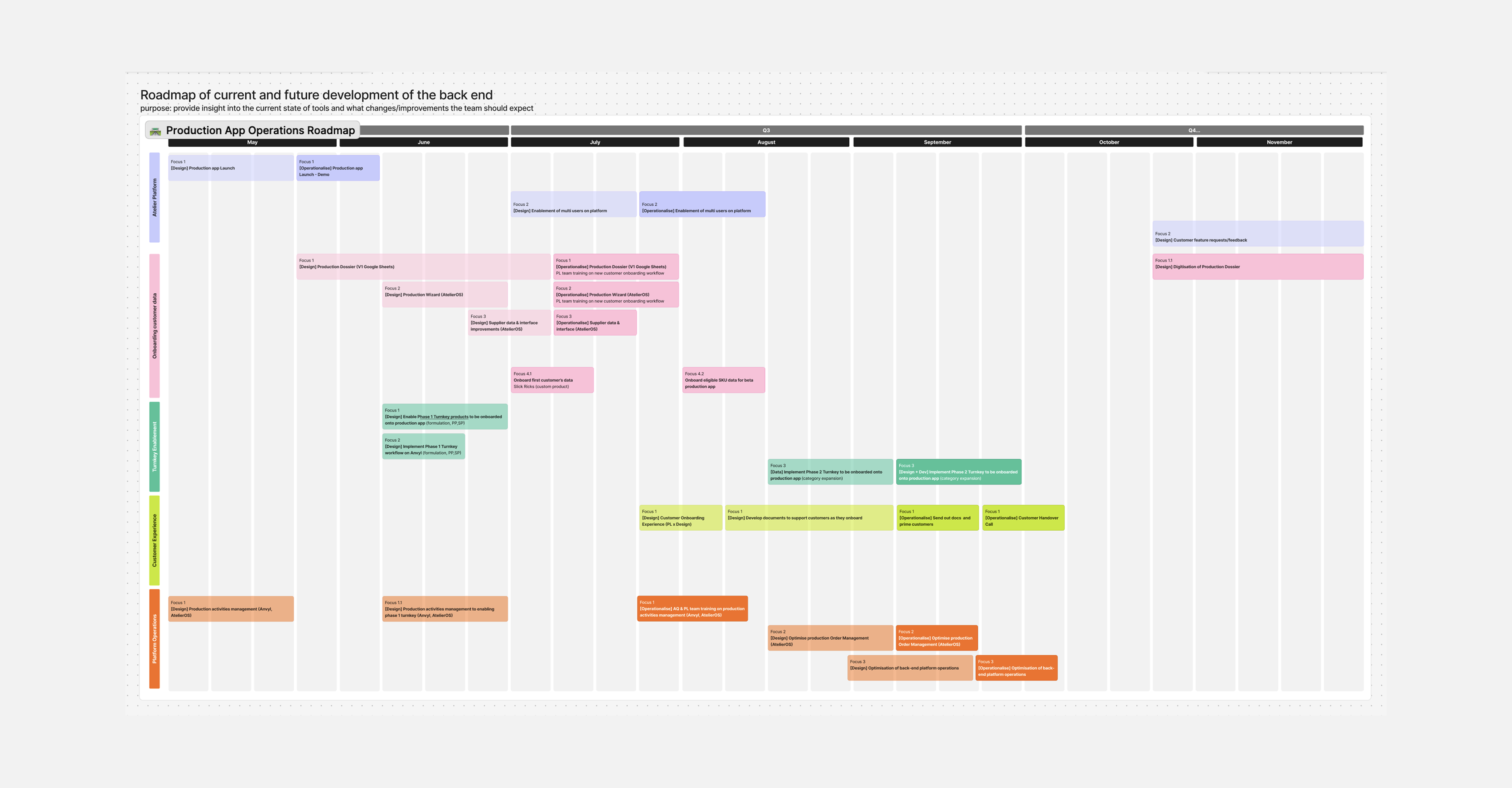
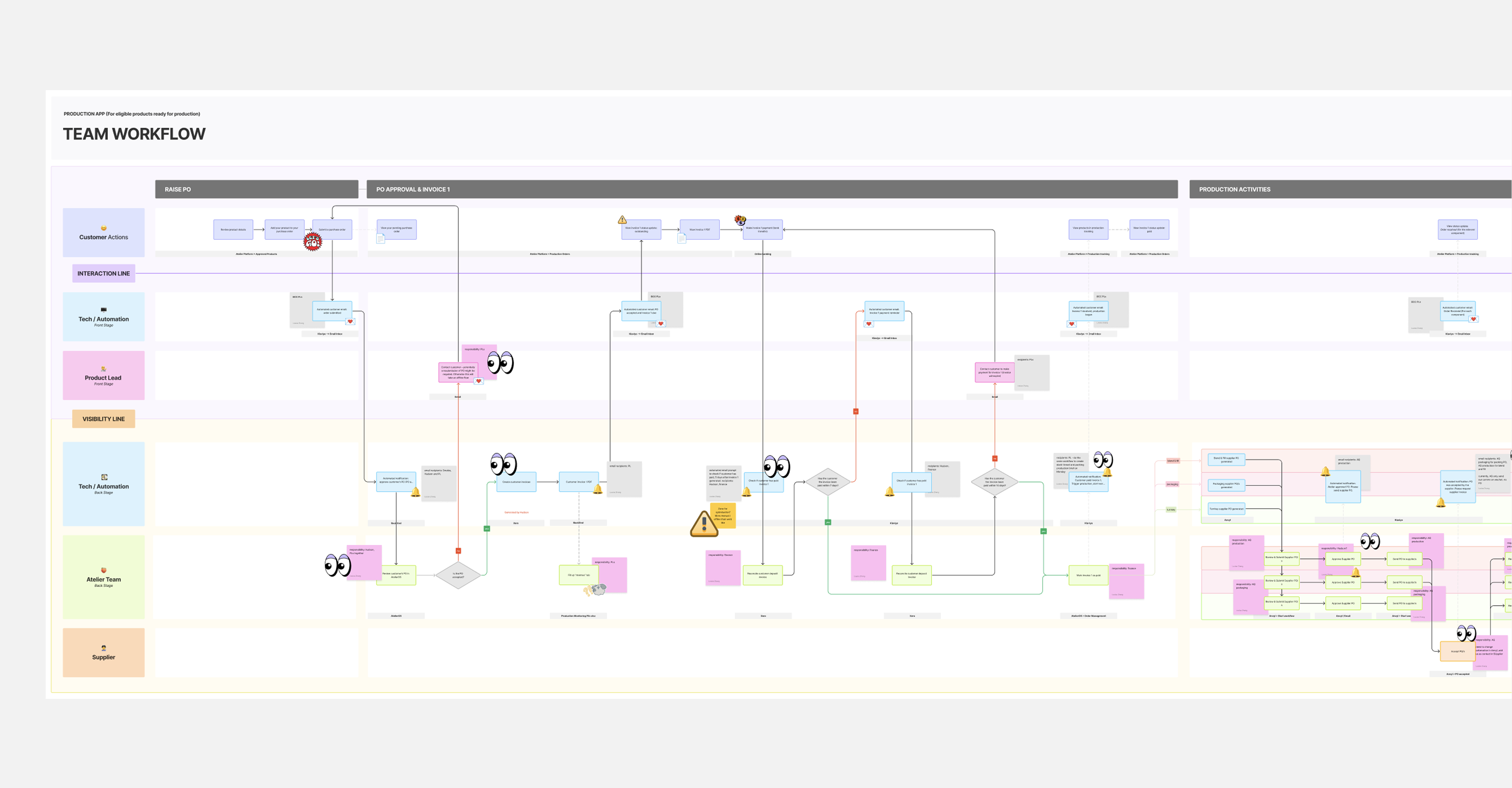
For V1 a static but accurate timeline was shipped. In the background a live version was being built which also gave us time to validate the feature before committing to it.
.png)
Hovering a product card reveals three contextual buttons. Enterprise users don't browse, they plan.
The standard click-through model forces them to remember MOQ pricing in memory across multiple pages. This interaction lets users toggle multiple cards to view pricing simultaneously and compare at a glance. Validated by customers who confirmed it matched how they actually planned pricing decisions.
Insight 1: The multi-user gap
Enterprise customers have teams, not single users and the platform couldn't serve these accounts properly without multi-user functionality. The decision was to prioritise for post-beta to allow us to deliver MVP before adding complexity.
Insight 2: Users didn't need hand-holding
100% task completion across moderated remote sessions with 3 enterprise customers.
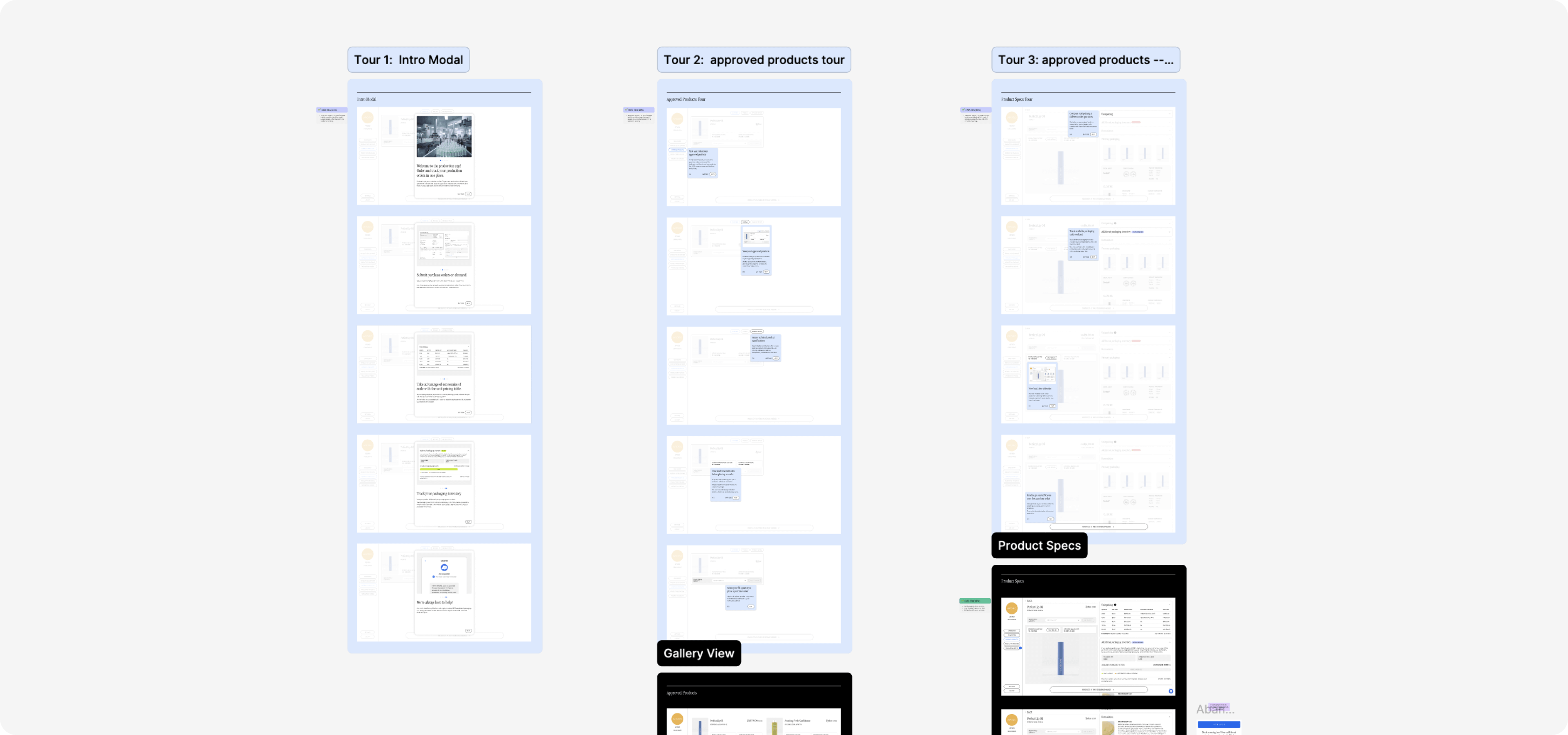
Our enterprise segment had deep industry knowledge and wanted to get straight into the platform. The onboarding added friction where there should have been speed. I now validate needs by segment rather than assuming solutions from previous projects will transfer.
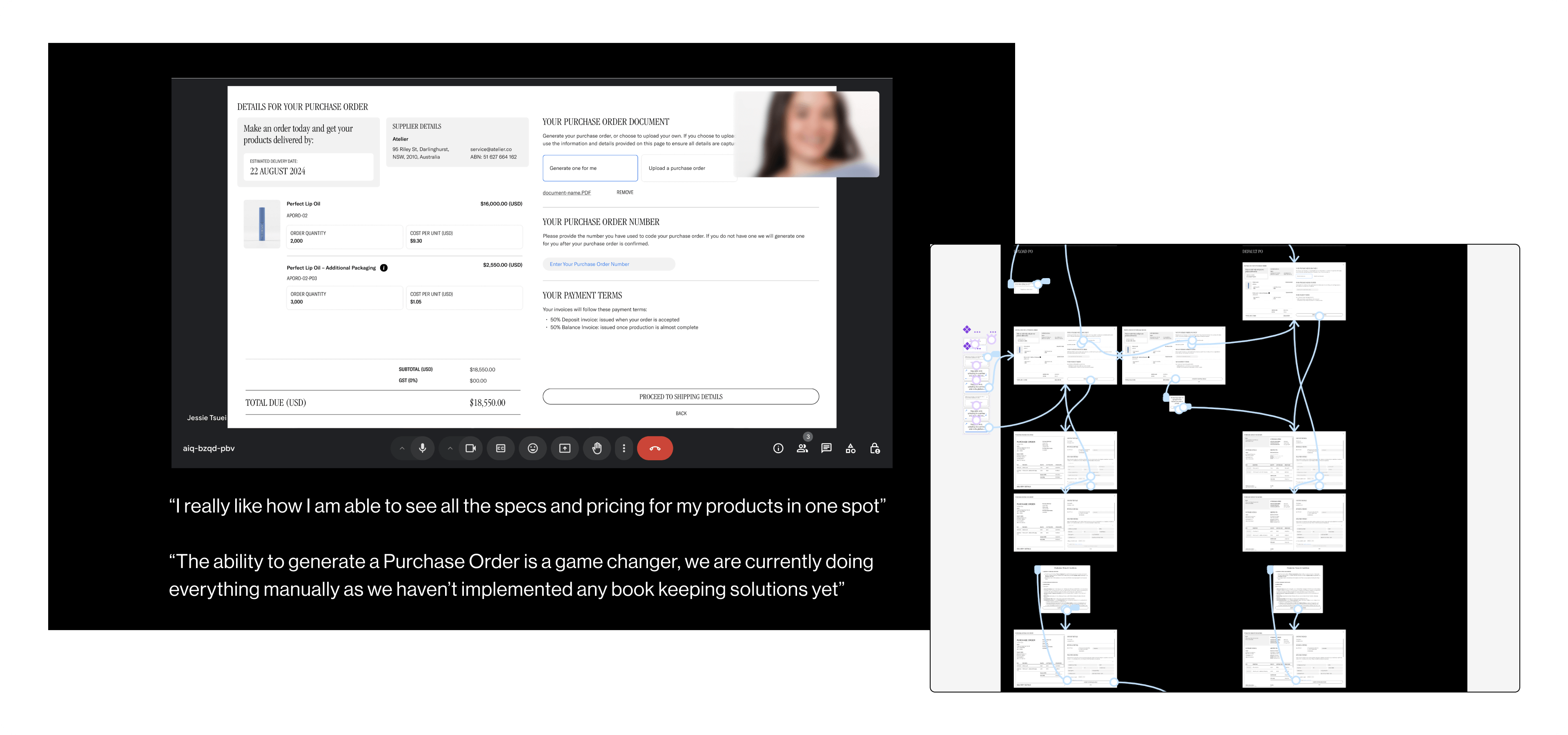
One customer told us they used to create purchase orders in Google Docs. After launch, they did it in the platform.